
Increasing Electrical Capacity for Modern Demands
Service Upgrades in Spring Valley for properties whose current electrical capacity limits equipment additions or renovations
Existing power capacity that no longer matches modern electrical demand creates bottlenecks for homeowners and businesses planning equipment additions, renovations, or electrification projects. Geezus Renewable Solutions handles electrical service upgrades for properties in Spring Valley, San Diego, Chula Vista, and surrounding areas where load calculations reveal that planned additions exceed available capacity. The work connects directly with renovations, added appliances, electric vehicle charging equipment, solar installations, and energy storage projects that require more power than older electrical services can deliver safely.
Service upgrades involve replacing the components between the utility connection point and the main panel, including service conductors, meter base, disconnect hardware, and the panel itself when current capacity is insufficient. The project requires utility coordination for temporary disconnection and reconnection at the new capacity, inspection at multiple stages, and sometimes trenching or overhead work depending on whether service conductors run underground or through aerial attachment. Proper sizing accounts for current loads plus planned additions, avoiding undersizing that limits future flexibility or excessive oversizing that wastes installation budget.
Arrange evaluation before installing new high-demand equipment to determine whether your service requires upgrading.
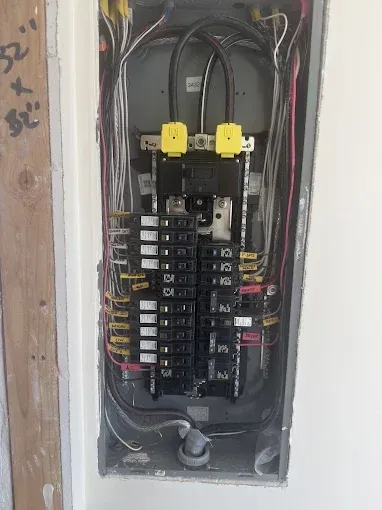
What Separates Adequate Service from Undersized Capacity
Service upgrade projects start with load calculation that accounts for existing circuits, planned equipment additions, and applicable code requirements mandating minimum service sizes for various occupancy types. California's Title 24 energy code and local amendments affect sizing decisions, particularly for properties incorporating electric vehicle charging or preparing for solar and battery installations. The calculation reveals whether your current service can accommodate planned changes or whether upgrade becomes necessary before new equipment is connected.
After a service upgrade, your property supports simultaneous operation of major appliances and equipment without voltage sag that dims lights or causes equipment to perform poorly. Heat pumps, electric ranges, vehicle chargers, and solar inverters all receive adequate power without forcing choices about which equipment can run concurrently. Circuit breakers stop tripping during normal appliance combinations, and the system handles startup surge currents from motors and compressors without nuisance interruptions. The infrastructure supports electrification transitions that would otherwise remain impossible under constrained capacity.
Upgrade scope varies considerably based on existing service type and utility infrastructure serving your property. Some properties need only the customer-side components replaced while others require utility infrastructure improvements including transformer upgrades or additional distribution capacity. The utility determines what improvements their system requires, affecting project timeline and sometimes cost allocation between utility responsibility and customer-side work.
Common Questions About Service Upgrades
Property owners considering service upgrades typically ask about project necessity, scope, and coordination with other electrical work or planned equipment installations.
What triggers the need for electrical service upgrade?
Combined load from existing equipment plus planned additions exceeds 80 percent of current service capacity, voltage measurements show excessive drop under load, or specific equipment like Level 2 EV chargers or whole-home batteries requires capacity your current service doesn't provide.
How does service upgrade differ from panel replacement?
Panel replacement changes only the distribution panel and breakers while service upgrade includes new conductors from the utility connection point, new meter base, upgraded disconnect equipment, and larger panel, addressing the entire pathway from utility connection through final distribution rather than just the endpoint.
When should service upgrades happen relative to other electrical projects?
Upgrades occur before equipment installations or renovation electrical work begins, since the new service capacity must be available before circuits for additional loads are connected, and attempting to add loads to inadequate service creates safety hazards and code violations.
What utility coordination does service upgrade require?
The utility temporarily disconnects power at the transformer, verifies their infrastructure can support new service capacity and sometimes schedules their own upgrades, inspects the new installation before reconnecting at upgraded capacity, and updates their records to reflect new service size.
How do Spring Valley properties preparing for solar benefit from service upgrade timing?
Coordinating service upgrades with solar installation avoids double work and allows proper sizing for both solar supply and increased electrical loads, since properties adding solar often simultaneously electrify heating and transportation, requiring significantly more capacity than either addition alone would demand.
Geezus Renewable Solutions evaluates properties for service upgrade requirements and manages the installation process including utility coordination and inspection. Request load analysis to determine whether your planned equipment additions or renovation require service capacity increases before project work begins.