
Panel Replacement for Adequate Power Distribution
Electrical Panel Installation in Spring Valley for properties adding equipment, renovating, or replacing obsolete panel models
Spring Valley and San Diego area properties increasingly require panel replacements as homeowners and businesses add equipment their existing electrical service wasn't designed to support. The electrical panel serves as the distribution point for power throughout a property, with circuit breakers protecting individual branch circuits and the main breaker controlling total property load. Geezus Renewable Solutions installs electrical panels sized appropriately for current and anticipated electrical demand, whether for renovations, equipment additions, or replacement of panels that no longer meet safety standards or capacity requirements.
Panel installation involves calculating total connected load, applying appropriate demand factors for the occupancy type, and sizing the panel to accommodate existing circuits plus reasonable future expansion. Proper sizing prevents the need for another replacement when additional circuits become necessary, while oversizing beyond realistic requirements wastes money on capacity that will never be utilized. The installation process includes coordinating utility disconnection, replacing the panel and any required upstream components, and arranging inspection before the system is re-energized.
Arrange an assessment to determine whether your property requires a new panel and what capacity suits your electrical demands.
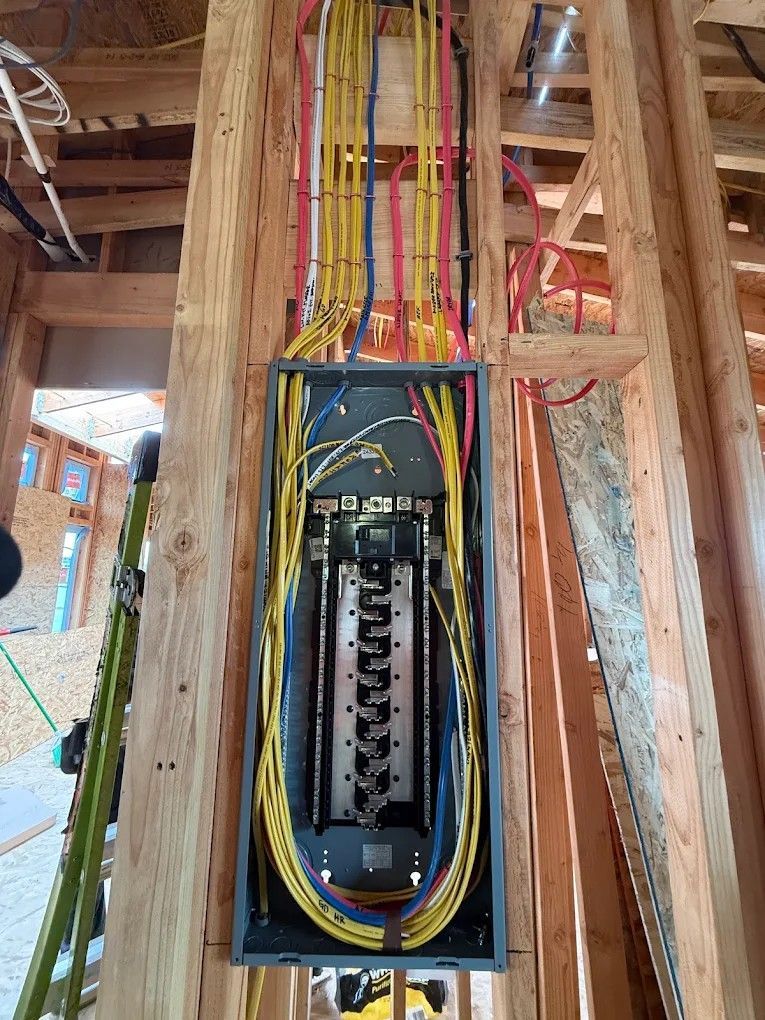
What Panel Installation Actually Accomplishes
New panel installation begins with evaluating whether your existing service conductors and meter base can support the planned panel capacity or whether those upstream components require replacement as part of the project. Some properties need only the panel replaced while others require complete service upgrades including new conductors from the utility connection point. The distinction affects project scope, utility coordination requirements, and whether trenching or overhead work becomes necessary.
A new panel provides correctly sized spaces for all circuits without double-tapping breakers or forcing incompatible breaker types into available positions. The panel includes appropriate arc-fault and ground-fault protection meeting current code requirements, eliminates the hazards present in obsolete panel designs like Federal Pacific or Zinsco models known for breaker failure, and provides clear labeling identifying what each circuit controls. Homeowners and businesses gain accessible spaces for future circuit additions without requiring another panel replacement to accommodate changing electrical needs.
Panel installations differ significantly between straightforward replacements in existing locations and situations requiring panel relocation to meet current clearance requirements or accommodate changed building layouts. Relocated panels involve new circuit routing that may require wall or ceiling modifications to conceal wiring, while in-place replacements typically reuse existing circuit entry points and mounting locations if those meet code requirements for working space and accessibility.
What Property Owners Usually Ask
Questions about panel replacement generally focus on sizing decisions, project scope, and recognizing when replacement becomes necessary.
How is panel size determined for a property?
Panel capacity calculation starts with total connected load, applies demand factors based on occupancy type and equipment characteristics, adds capacity for anticipated future additions, and accounts for code requirements that mandate minimum service sizes for residential and commercial occupancies regardless of calculated load.
What indicates an electrical panel needs replacement?
Visible signs include rust or corrosion on the panel interior, breakers that don't reset firmly, scorch marks around breaker connections, insufficient spaces for needed circuits, or panel brands identified as fire hazards—Federal Pacific panels with Stab-Lok breakers and Zinsco panels both have documented failure patterns requiring replacement.
When does panel replacement require service upgrade?
If your existing service conductors and meter base are sized for lower capacity than the new panel, or if utility infrastructure serving your property can't support increased load, the project expands beyond panel replacement into service upgrade territory requiring utility coordination and potentially infrastructure improvements.
What work happens during panel installation?
The utility disconnects power at the meter, the old panel is removed and circuits are temporarily secured, new panel is mounted and existing circuits are reconnected with new breakers, labeling is completed, power is restored, and inspection verifies code compliance before the project closes.
How do Spring Valley electrical projects account for solar and battery integration?
Panel installations for properties planning future solar often include bus bar ratings and physical spaces suitable for solar breakers or supply-side connections, positioning the panel to allow practical inverter and battery placement without requiring future panel relocation to accommodate energy system installations.
Geezus Renewable Solutions evaluates properties for panel replacement and installs panels matched to current and planned electrical requirements. Schedule evaluation to discuss your property's panel condition, capacity needs, and project scope before equipment additions or renovations begin.