
Power Systems That Support Daily Household Function
Residential Electrical Services in Spring Valley for homes with outdated wiring or insufficient circuit capacity
Geezus Renewable Solutions handles residential electrical services in Spring Valley, San Diego, Chula Vista, and surrounding areas for homeowners who need safe, reliable power distribution throughout their property. The work addresses everyday household electrical needs, system upgrades required for renovations, and installations for new electrical equipment that exceed existing circuit capacity. Homes built before the 1990s often lack the circuit count and amperage needed for modern appliance loads, leading to repeated breaker trips and overheating at connection points.
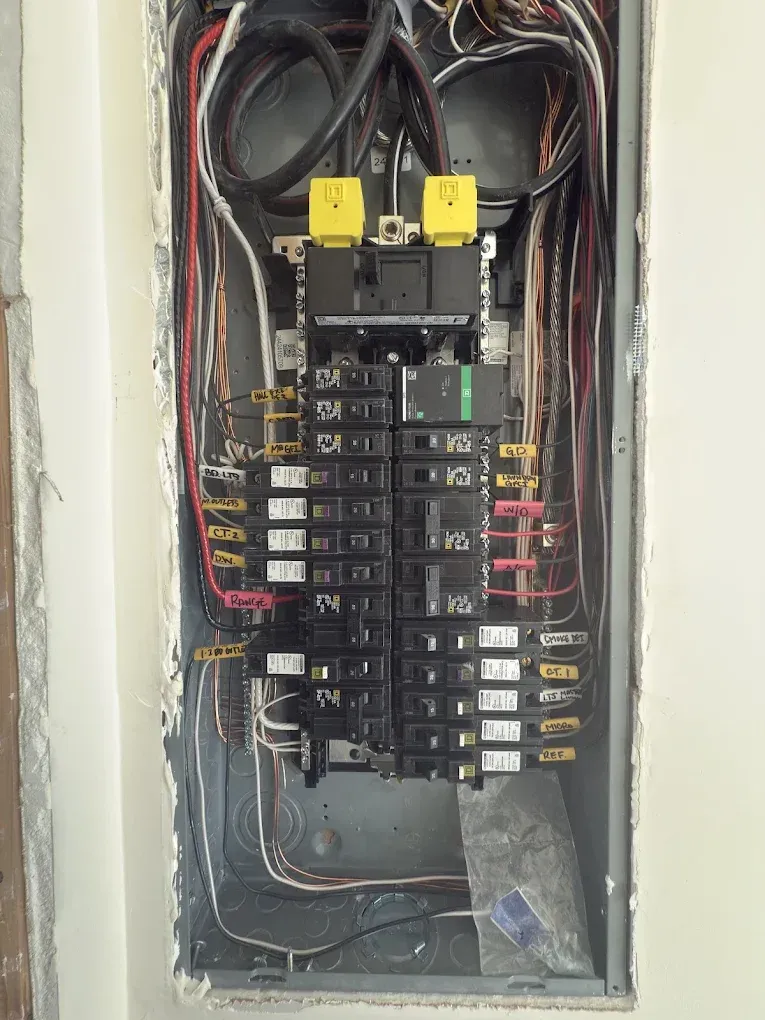
The service involves professional evaluation of your home's electrical system, including panel capacity, circuit configuration, grounding integrity, and wire condition. Code-conscious workmanship addresses safety standards that have evolved significantly over the past three decades, particularly regarding arc-fault and ground-fault protection in wet locations and sleeping areas. The evaluation identifies undersized circuits, aluminum wiring connections that require special treatment, and panels that no longer meet current load requirements.
Schedule electrical service to review your home's current system capacity and planned equipment additions.
What Proper Electrical Work Requires
Residential electrical work starts with load calculation to determine whether your existing service can support planned additions or whether an upgrade becomes necessary before new circuits are installed. The calculation accounts for continuous loads like HVAC systems, major appliances, and any high-draw equipment you plan to add. Southern California's increasing adoption of heat pumps, induction cooking, and electric vehicle charging has shifted many older 100-amp services into inadequate territory, making this assessment critical before work begins.
After the service is completed, you notice circuits that no longer trip under normal use, outlets that maintain consistent voltage under load, and lighting that remains stable when multiple appliances operate simultaneously. Properly sized circuits eliminate the voltage sag that dims lights when air conditioning starts, and correctly torqued connections prevent the heat buildup that degrades wire insulation over time. The difference shows up in equipment that runs cooler and connections that remain secure through thermal cycling.
The work includes permits and inspection when required by the scope of changes, ensuring that modifications to your electrical system meet the standards enforced by local building departments. Some projects involve only minor additions or replacements that don't require permits, while others that alter service capacity or add circuits do. The distinction depends on what's being changed and whether it affects the overall system safety or capacity.
Questions Homeowners Ask Before Electrical Work
Homeowners in Spring Valley and neighboring communities typically ask about system capacity, upgrade timing, and what different electrical projects involve before scheduling service.
How do I know if my electrical panel needs upgrading?
You see repeated breaker trips when running normal appliance combinations, notice flickering lights when equipment starts, or plan to add high-demand devices like EV chargers or heat pumps that your current service can't support.
What happens during an electrical system evaluation?
The electrician examines your panel for available capacity, checks circuit sizing against connected loads, tests grounding and bonding connections, and identifies any wiring or component conditions that present safety concerns or limit system reliability.
When should electrical work happen during a renovation?
Electrical rough-in occurs after framing and before insulation and drywall, allowing wire routing through studs and installation of boxes at correct depths, with final device installation and trim-out happening after wall finishing is complete.
What separates code-minimum work from quality installation?
Quality work includes proper wire support intervals, correct box fill calculations that prevent overcrowding, appropriately sized conductors that account for voltage drop over distance, and connections torqued to manufacturer specifications rather than guessed by feel.
How does Southern California climate affect residential electrical systems?
Attic temperatures in Spring Valley regularly exceed 140 degrees during summer months, requiring wire insulation rated for high-temperature environments and derating of conductor ampacity when circuits run through unconditioned spaces for extended distances.
Geezus Renewable Solutions evaluates residential electrical systems for homeowners planning renovations or experiencing capacity issues. Request an assessment to determine what your property's electrical system requires before adding new equipment or beginning remodeling work.